
Removing a tree can look simple, yet small mistakes can lead to injuries, fallen limbs, or damage around your home. At Pulla Tree Service LLC, we believe a clear tree removal safety checklist helps you prepare with care and avoid risky choices before work begins.
Good planning also helps you spot danger early, protect nearby structures, and keep people out of harm’s way. This guide explains the key steps, common warning signs, and simple actions that support a safer and smoother job from start to finish.
Check Tree Condition Before Any Work Starts
Start by looking at the trunk, base, roots, and upper limbs. Cracks, hollow areas, fungus, and dead sections are common signs a tree is dangerous. A heavy lean or sudden change in shape can also point to hidden weakness.
Then review the area around the tree. Nearby homes, fences, cars, walkways, and overhead lines raise the level of risk. A complete tree removal safety checklist should also note soft ground, poor access, and branches hanging over busy spaces.
For a closer look at site risks, visit our guide on tree assessment for health and safety. Pulla Tree Service LLC uses this kind of review to help homeowners make safer decisions before removal begins.
Know Local Rules, Access, and Permissions
Before any work date is set, confirm whether your town, neighborhood, or property rules require approval. Some areas need permits for large or protected trees. This step reduces delays and helps you avoid fines or disputes with local officials.
It is also wise to confirm access points, property lines, and parking needs for equipment. When the job is planned early, residential tree removal safety becomes easier to manage because the space, timing, and legal steps are already clear.
Build a Clear Removal Plan for the Day
A simple plan keeps the job organized and lowers stress once work starts. Our tree removal preparation checklist often includes these basic points:
- Choose the safest fall direction and backup escape path.
- Check weather, wind, and ground conditions before starting.
- Identify drop zones for limbs, trunk sections, and equipment.
- Confirm who is on site and what each person should do.
For more details, see how to prepare for tree removal. Pulla Tree Service LLC recommends planning each stage in advance so the work stays controlled and easier to follow.
Protect the Space Around Your Home
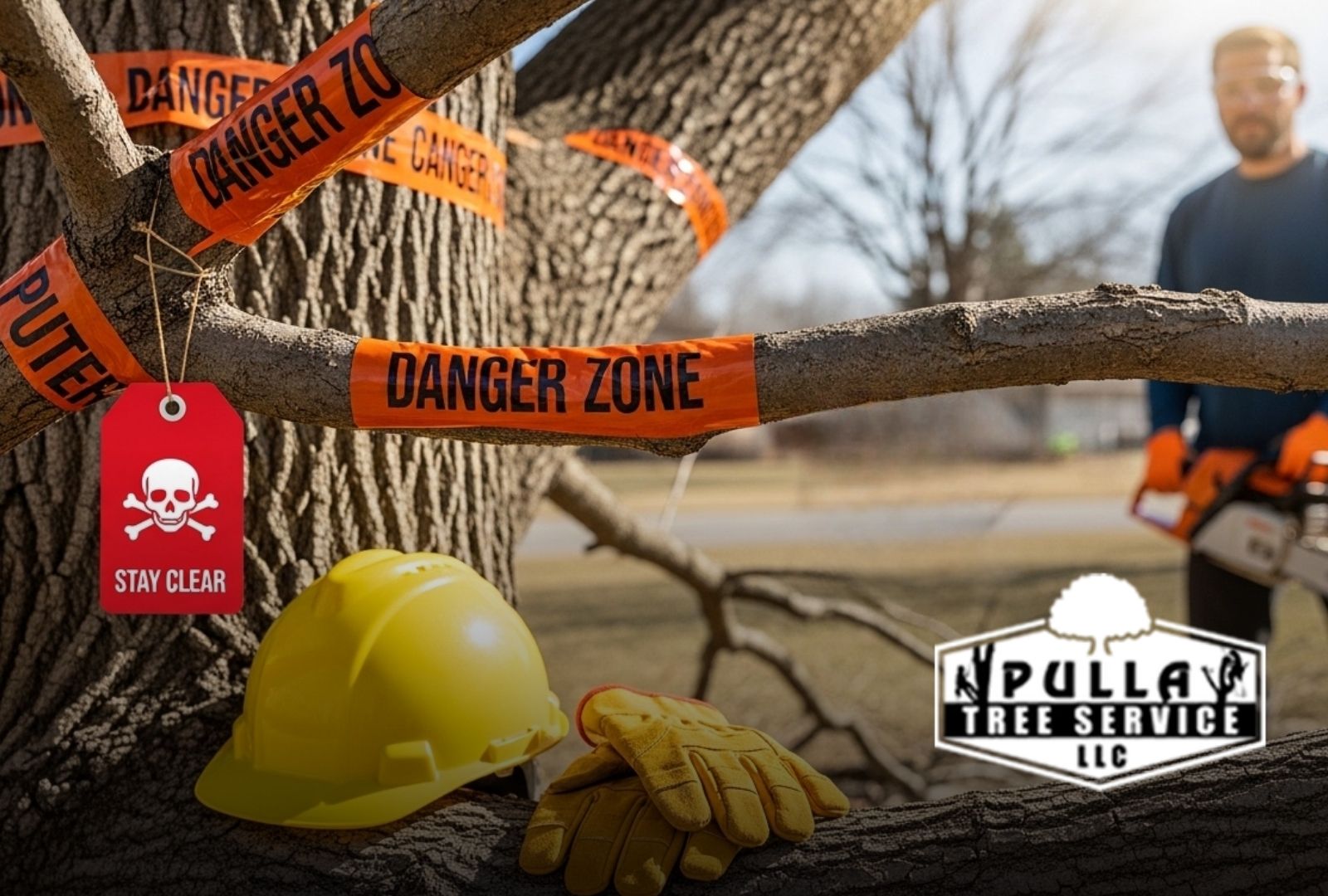
Keep children, pets, and visitors well away from the work zone. Use cones, tape, or temporary barriers to mark the area clearly. These simple tree removal safety tips help prevent someone from walking into a dangerous space without noticing the hazard.
If the tree stands near a road or driveway, make sure vehicles can move safely around the site. Clear signs and visible boundaries support residential tree removal safety and reduce confusion for neighbors, delivery drivers, and anyone passing by.
Prepare Equipment and Emergency Response Steps
Before work begins, gather and inspect the tools and safety items needed for the site. We recommend checking:
- Helmet, eye protection, gloves, and sturdy boots.
- Ropes, wedges, and cutting tools for damage or wear.
- First aid kit, charged phone, and emergency contact list.
- Fuel levels, sharp edges, and safe storage areas.
Emergency planning matters just as much as gear. Review who will call for help, where the nearest exit path is, and how to respond if weather changes fast. For high-risk jobs, our crane-assisted tree removal safety page explains why careful setup matters.
What Should You Avoid Before Tree Removal Begins?
Many accidents happen because people rush the job or ignore early warning signs. To support a safer outcome, avoid these common mistakes:
- Do not start without checking weather and wind.
- Do not leave cars, furniture, or tools near the drop zone.
- Do not overlook cracks, rot, or sudden leaning.
- Do not let bystanders stand close to the work area.
- Do not assume every removal is safe for a homeowner to handle alone.
These points belong on every tree removal safety checklist because they address what not to do before tree removal and help reduce avoidable risk from the start.
Frequently Asked Questions
What are common signs a tree is dangerous?
Common warning signs include deep cracks, hollow spots, dead limbs, fungus near the base, exposed roots, or a sudden lean. When several of these appear together, the risk of failure can rise quickly.
Why is a tree removal preparation checklist important?
A tree removal preparation checklist helps you review the site, confirm permissions, clear the area, and prepare tools before work starts. It lowers the chance of missed steps and supports a more organized job.
What are basic tree removal safety tips for homeowners?
Keep people away from the area, watch the weather, inspect the tree carefully, and plan escape routes before any work begins. Pulla Tree Service LLC also recommends getting expert help when the tree is large or close to structures.
When is emergency help the better option?
If a tree is split, leaning after a storm, blocking access, or resting on a home, quick action may be needed. In those cases, visit our emergency tree removal page to review urgent service information.
How can I ask about a removal project at my home?
You can reach Pulla Tree Service LLC through our contact page to discuss site details, timing, and the next steps for a safer project.
Review the Site After the Tree Is Down
Once the main work is finished, do a final walk-through so the area is safe to use again. Pulla Tree Service LLC suggests checking these points:
- Remove loose branches, wood pieces, and sawdust from paths.
- Check the ground for holes, soft spots, or hidden trip hazards.
- Make sure fences, driveways, and nearby structures are clear and safe.
- Review whether any follow-up work is needed around the stump area.
This final review keeps your property safer and helps you confirm that the full tree removal safety checklist was followed from the first inspection to the last clean-up step. For local project details, see our Greenwich tree removal page.