
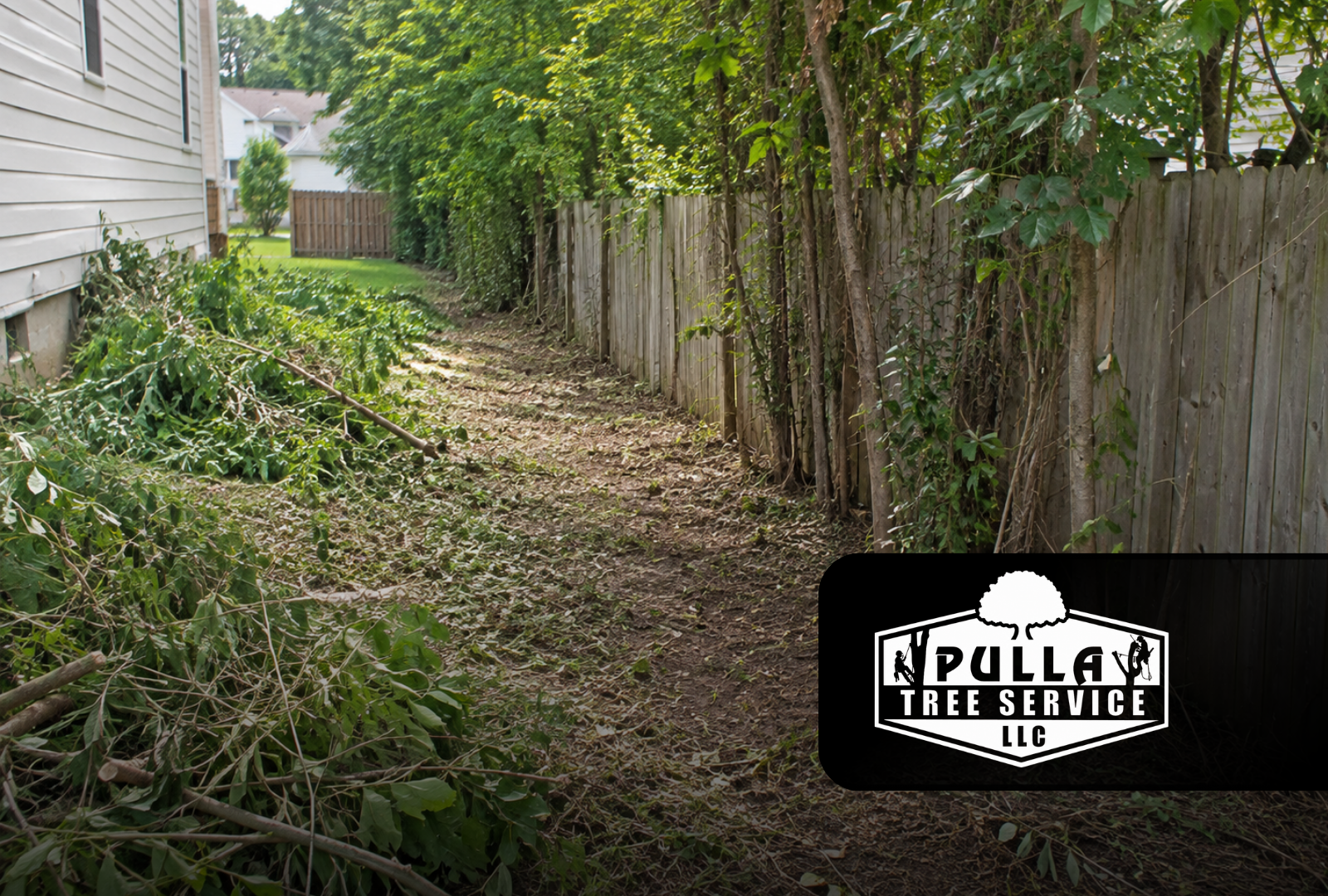
Lot clearing for property line access can make a yard easier to reach, define, and use. However, the work involves more than clearing brush and debris. Clear boundaries, safe access, and local rules matter from the start.
At Pulla Tree Service LLC, we plan each clearing project around access, safety, and the condition of the property. This guide explains practical property line lot clearing steps, from boundary checks to final access planning.
Confirm Property Boundaries Before Starting Any Clearing Work
Before clearing land near boundary areas, confirm where your property ends. Review your deed, survey map, or legal records. If the line is unclear, a licensed surveyor can help prevent mistakes.
Local rules may also control vegetation clearing, soil changes, or protected areas. Before starting lot clearing for property line access, check permits and local requirements. Our lot clearing service details explain what a clearing project may include.
Protect Soil Drainage And Nearby Areas During Clearing
Residential boundary clearing can affect soil, drainage, and nearby natural areas. Too much ground disturbance may increase runoff or erosion. Therefore, it helps to protect stable ground and avoid disturbing areas outside the planned work zone.
- Keep the marked work area clearly defined.
- Use mulch or ground cover where soil is exposed.
- Plan drainage before opening heavily covered areas.
At Pulla Tree Service LLC, we focus on controlled clearing that supports access without creating unnecessary disturbance. Careful planning can help the cleared edge remain stable afterward.
Choose Proper Equipment For Safer Lot Clearing Results
The right equipment depends on the size and density of the area. Light brush may need simple hand tools, while thicker growth may require powered equipment. For lot clearing for access, matching the equipment to the site helps the work move more safely.
Protective gear is also important. Gloves, eye protection, sturdy boots, hearing protection, and proper clothing can reduce common job-site risks. Clear work zones and safe spacing also reduce hazards.
Plan Each Clearing Stage To Keep Access Open
A clear work order helps prevent blocked paths and repeated cleanup. Mark the area first, then open smaller sections before moving into denser growth. Lot clearing for property line access works best when workers keep a safe route open for equipment and debris movement.
- Mark the confirmed boundary and work zone.
- Open brush-covered sections that block entry.
- Move through dense areas in a safe order.
- Finish with debris cleanup and ground checks.
Dry weather can reduce mud and soil damage. A simple sequence keeps the work organized and supports a cleaner final space.
Manage Debris Safely After Boundary Clearing Work Ends
Branches, brush, logs, and other organic debris should be sorted as the project moves forward. This makes hauling easier. Some small material may be chipped for ground cover, while larger material may need local disposal.
For small lot clearing near me searches, cleanup quality is often as important as the main clearing work. At Pulla Tree Service LLC, we plan debris handling as part of the project so access areas are not left blocked by loose material.
- Separate light brush from heavier debris.
- Keep cleared paths free from loose material.
- Follow local rules for disposal or recycling.
Handle Common Obstacles Before They Delay Clearing Work
Hidden roots, utility lines, uneven ground, and wet soil can slow a project. Before heavy digging, confirm underground utility locations and inspect the work zone. This reduces damage risks and helps protect workers and nearby property.
Weather also affects property line lot clearing. Rain can soften soil, while high wind can make outdoor work unsafe. Our Shelton lot clearing information and Newtown lot clearing information provide useful local service details.
Frequently Asked Questions
Why clear land near a property boundary?
Clearing can improve access, make the edge easier to see, and prepare the area for fencing, inspections, or other property projects.
Do I need a survey before clearing?
A survey is useful when the property line is unclear. It can help prevent work from crossing onto a neighboring lot.
Can every overgrown area be cleared?
Not always. Local rules, protected areas, drainage concerns, and property conditions can affect what work is allowed.
How long does boundary access stay clear?
That depends on how quickly vegetation returns. Regular checks and follow-up clearing can help keep access open.
Is professional clearing useful for difficult areas?
Professional help can be useful for thick brush, uneven ground, limited access, or heavy debris.
Keep Cleared Property Lines Open With Simple Follow-Up
After lot clearing for property line access, regular checks help prevent fast regrowth from blocking the area again. Watch for new brush, invasive plants, standing water, and debris that may reduce safe movement along the boundary.
Good follow-up protects the results of lot clearing for property line access and keeps the boundary easier to use. With Pulla Tree Service LLC, you can discuss your next step through our contact page for lot clearing questions and build a clear plan for your property.