
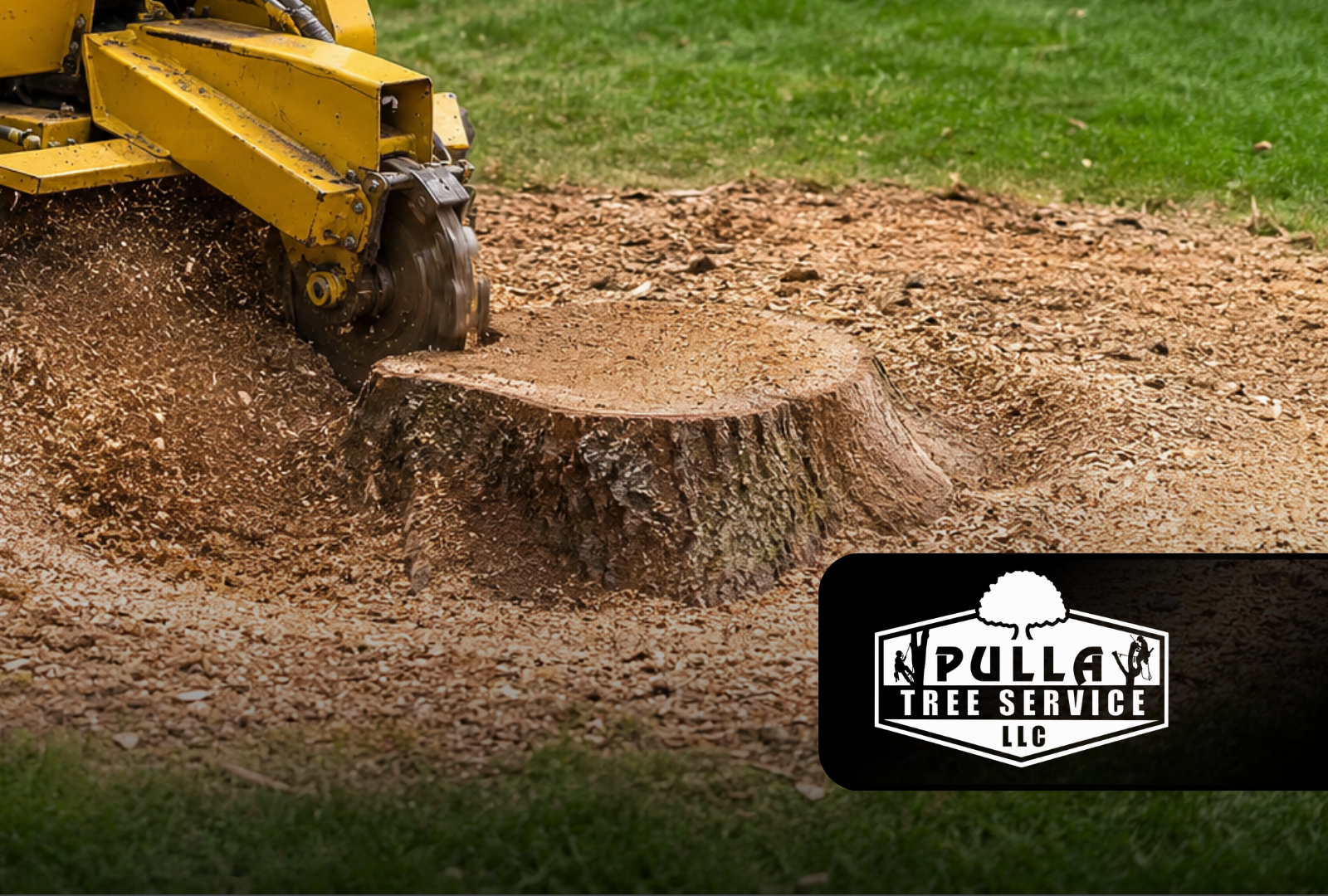
Stumps may look harmless, yet they can hold damp wood that attracts pests. With stump grinding for termite prevention, we remove one common hiding place before it becomes a bigger problem near your home.
At Pulla Tree Service LLC, we focus on simple yard solutions that support safer outdoor spaces. Therefore, removing old stump wood can help reduce pest pressure while keeping your lawn cleaner and easier to maintain.
Old Tree Stumps Can Raise Termite Risk Nearby
A termite risk tree stump often starts with moisture, shade, and soft wood. After a tree is cut, the remaining stump can slowly rot under the surface, giving termites a place to feed and settle.
Over time, termites may move from the stump toward fences, decks, sheds, or the home foundation. For this reason, stump grinding for termite prevention should be part of a smart yard care plan.
Ground Stump Removal Supports A Cleaner Safer Yard
Grinding removes the main part of the stump and lowers the leftover wood below the soil line. As a result, your yard has fewer damp areas where insects can gather.
Our team can also help you review stump removal options when you want a cleaner space after stump grinding. This makes the area safer for mowing, walking, and future planting.
- Fewer soft wood pieces left in the ground
- Better lawn appearance after removal
- Less moisture around the old stump area
Simple Benefits For Home Protection And Yard Health
Stump grinding to prevent termites works by removing a food source before pests can build around it. It also helps reduce tripping hazards and opens the space for fresh soil or grass.
With Pulla Tree Service LLC, we explain the best next step based on stump size, location, and yard condition. In many cases, quick action can stop a small concern from becoming a larger yard issue.
Leftover Stumps Create Moisture Food And Hidden Tunnels
When comparing stump grinding vs leaving stump termites behind, leaving the stump often creates more risk. Damp wood can stay under the soil, and termites may use hidden paths to move through the ground.
Stump grinding for termite prevention breaks up this soft wood and exposes the area to air. Then, the soil can dry more easily, which makes the spot less welcoming for termites.
- Old stumps can hold water after rain
- Soft wood gives termites easy food
- Hidden tunnels may form below the surface
Safe Steps For Grinding Stumps The Right Way
Before grinding, the stump area should be checked for rocks, pipes, roots, and other hidden hazards. Safety matters because stump grinders are strong machines that need careful handling.
After grinding, the hole should be filled with soil and packed well. For more guidance after the work, our after-grinding care tips explain how to manage the area and reduce moisture.
Choosing Professional Help Over Risky Do It Yourself Work
DIY grinding may seem simple, but rental machines may not cut deep enough. Also, hidden utilities, uneven soil, or large roots can make the job harder and less safe.
At Pulla Tree Service LLC, we use proper equipment and careful methods to reduce leftover wood. You can also review the benefits of expert stump grinding before deciding how to handle your stump.
- Trained crews know how to work safely
- Deeper grinding leaves fewer wood pieces
- Cleanup is easier with professional help
Frequently Asked Questions
Does stump grinding help prevent termites?
Yes, it can help reduce termite attraction by removing rotting stump wood. While it is not a full pest treatment, stump grinding for termite prevention lowers one common risk in the yard.
When should grinding happen after tree removal?
Stump grinding after tree removal should happen as soon as the area is safe and accessible. Acting early helps limit moisture buildup and reduces the chance of pests settling in the stump.
Can termites still appear after stump grinding?
Termites can still appear if other food sources or moisture problems exist nearby. Therefore, it is important to keep wood piles away from the home and watch for damp soil.
Should all old stumps be removed from my yard?
Most old stumps should be removed when they are close to structures, walkways, or fences. Grinding is often the cleaner option because it removes the stump without major digging.
How deep should the stump be ground?
Many stumps are ground several inches below the soil line. However, the right depth depends on the stump, the roots, and how the area will be used later.
Long Term Yard Care Keeps Termites Away
Stump grinding for termite prevention works best with regular yard care. Keep the ground dry, remove extra wood chips, trim plants away from the home, and check nearby structures after heavy rain.
With Pulla Tree Service LLC, you can also ask about planning the work and reviewing stump grinding cost factors. For direct help, stop by our contact page and tell us about your stump.