
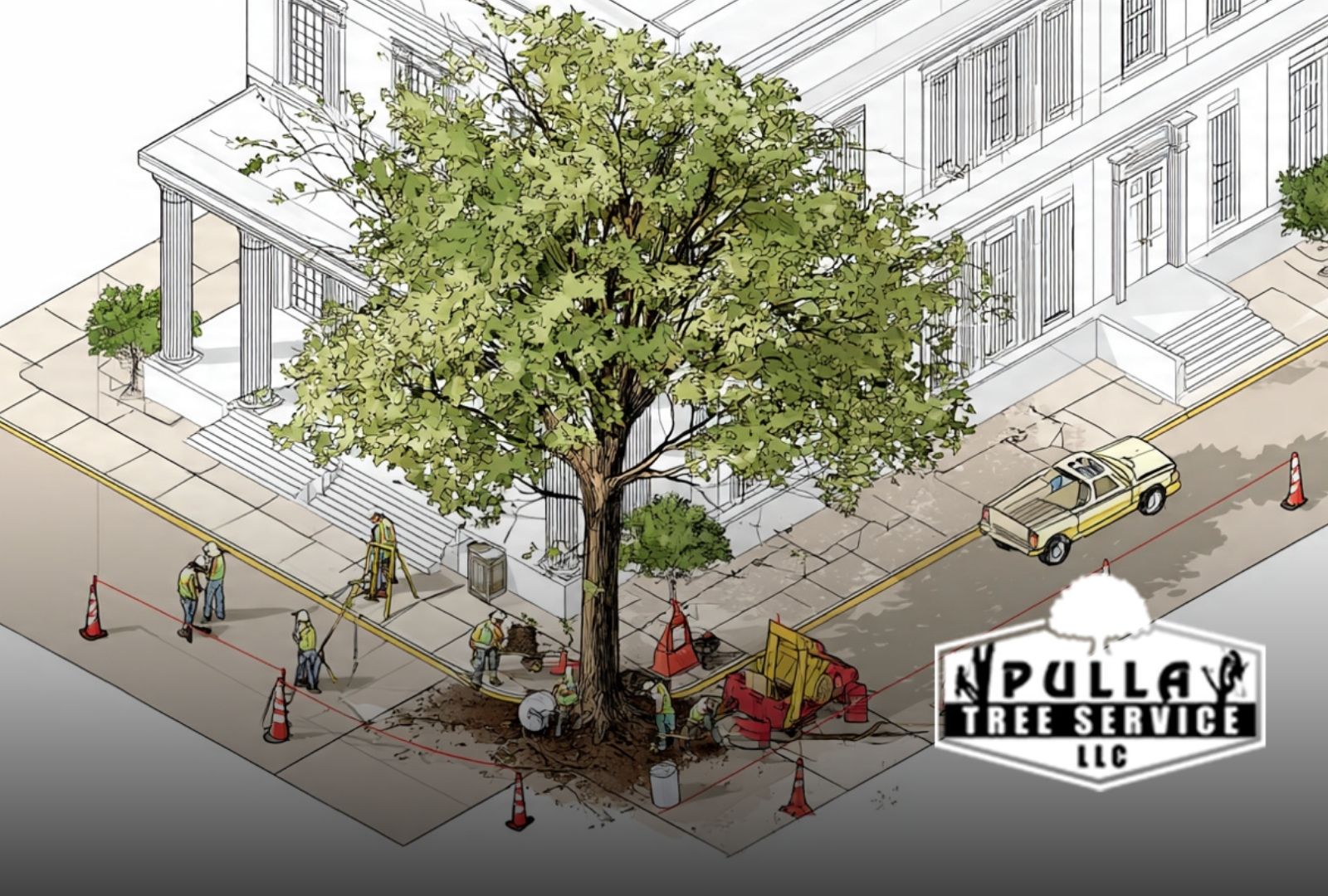
Safe Tree Removal in Urban Areas can be challenging. As cities grow, space gets tight and risks increase. Trees add shade and cleaner air. However, removal needs planning to protect people and property. In this guide, you’ll learn key steps, smart safety habits, and practical ways to reduce damage.
You’ll also find an urban tree removal safety checklist, plus tips to protect buildings and streets. In addition, we cover common hazards and the best equipment and protocols for urban tree removal safety. Finally, if you need help, Pulla Tree Service LLC can support your next project.
Assess the Job Before You Start
First, check the tree’s condition and its exact position. Look for deep trunk splits, dead sections, or a heavy lean. Also, note how close it is to sidewalks, driveways, fences, and overhead lines. This quick review supports Safe Tree Removal in Urban Areas and helps prevent surprises.
Next, consider how the tree may break as it comes down. Some trees drop large pieces, while others split fast. Therefore, map a work zone and mark safe paths. Then, choose spots for ropes, trucks, and barriers, so the area stays controlled.
- Check the trunk, base, and root area
- Measure distance to buildings, streets, and lines
- Mark a clear drop zone and exit path
Know Local Rules and Permits
Before any work begins, review city rules. Many areas require permits, especially near streets or protected trees. Also, some towns set limits on work hours or traffic control. Because rules vary, it helps to call local offices early and keep records.
In addition, some locations require steps to reduce runoff and site damage. So, keep permits on-site, if needed. That way, you can show compliance quickly and avoid delays during Safe Tree Removal in Urban Areas.
Use a Practical Urban Tree Removal Safety Checklist
A clear checklist reduces missed steps. For example, it confirms the crew knows signals, plans, and emergency actions. Moreover, it helps you spot risks like loose limbs, unstable ground, and nearby traffic. Since city settings are busy, small details matter.
- Confirm a perimeter with cones, tape, and signs
- Review signals for “stop,” “lower,” and “clear”
- Check weather, visibility, and road activity
- Inspect ropes, straps, and lowering points
- Set an emergency plan and meeting spot
To dig deeper, read these tree removal tips for safer planning. Also, follow how to prepare your property for tree removal so the area is ready.
Best Equipment and Protocols for Urban Tree Removal Safety
Using the right gear helps prevent injury. Start with helmets, eye guards, gloves, and high-grip boots. Also, use ropes and lowering tools to guide heavy sections. Even more important, keep tools inspected and in good shape.
Because streets are loud, clear communication is vital. So, use simple hand signals and a lead person. In Safe Tree Removal in Urban Areas, controlled lowering often beats fast dropping. That approach limits bounce, damage, and blocked roads.
- Wear full head and eye protection
- Use ropes to lower sections near buildings
- Keep a spotter watching street movement
How to Protect Buildings and Streets During Tree Removal
Start by identifying what could be hit. This includes roofs, windows, parked cars, signs, and curb edges. Then, plan small sections instead of large drops. As a result, you reduce impact and keep the site calmer.
Also, work with utility teams when lines are close. If wires are involved, shutoffs may be needed. In addition, place boards or pads where equipment sits, so sidewalks crack less. This planning supports Safe Tree Removal in Urban Areas and lowers repair risk.
Managing Hazards in Urban Tree Removal Projects
Urban sites add extra hazards, like foot traffic, tight yards, and road lanes. Therefore, use clear barriers and keep the public out. Also, watch for hidden risks, such as soft soil, sloped ground, or loose concrete near the base.
Since projects can change fast, pause often to reassess. For example, if wind picks up, adjust your plan. Likewise, if a limb shifts, stop and reset. This steady approach supports Safe Tree Removal in Urban Areas and helps prevent rushed mistakes.
When to Use Professional Safe Tree Removal Services in Urban Areas
Some jobs require advanced tools and careful lowering. If the tree is near homes or streets, hiring help may be safer. In addition, a professional team can manage permits, traffic control, and cleanup steps. That reduces your risk and saves time.
If you’re in Connecticut, see tree removal services in Stamford, CT to understand local options. Also, for urgent risks after storms, use emergency tree removal after storms when fast action matters.
Handle Debris and Site Cleanliness
After removal, plan for debris early. For example, set a staging zone for wood and branches. Then, keep sidewalks clear so people can pass safely. Also, avoid blocking drains, since that can cause flooding.
Moreover, coordinate hauling times to reduce street congestion. If your project includes wider site work, review how to clear land safely and efficiently for organized cleanup steps. This keeps Safe Tree Removal in Urban Areas orderly from start to finish.
Frequently Asked Questions
What makes Safe Tree Removal in Urban Areas more risky?
City sites are tight and busy. Buildings, cars, and people are often close. So, control and planning matter more.
How do I create a good safety perimeter?
Use cones, tape, and clear signs. Also, set a single entry point for workers. Then, keep bystanders outside.
When should I use ropes and controlled lowering?
Use it when the tree is near structures or streets. That way, you lower sections safely and reduce damage.
What should be in an urban tree removal safety checklist?
It should cover barriers, gear checks, signals, road risks, and emergency steps. Also, include weather and ground checks.
What should I do if a tree is tangled with power lines?
Stop work and contact the utility company. Never pull or cut near live wires. Safety comes first.
Wrap-Up: Keep City Removal Safe and Controlled
Safe Tree Removal in Urban Areas depends on planning, clear zones, and smart lowering methods. Use the right gear, follow local rules, and keep people away from the work area. Also, reassess hazards as conditions change. If the job is complex, Pulla Tree Service LLC can help you reduce risk and protect nearby property.
For more details, reach out here: Contact Pulla Tree Service LLC for urban tree removal help.