
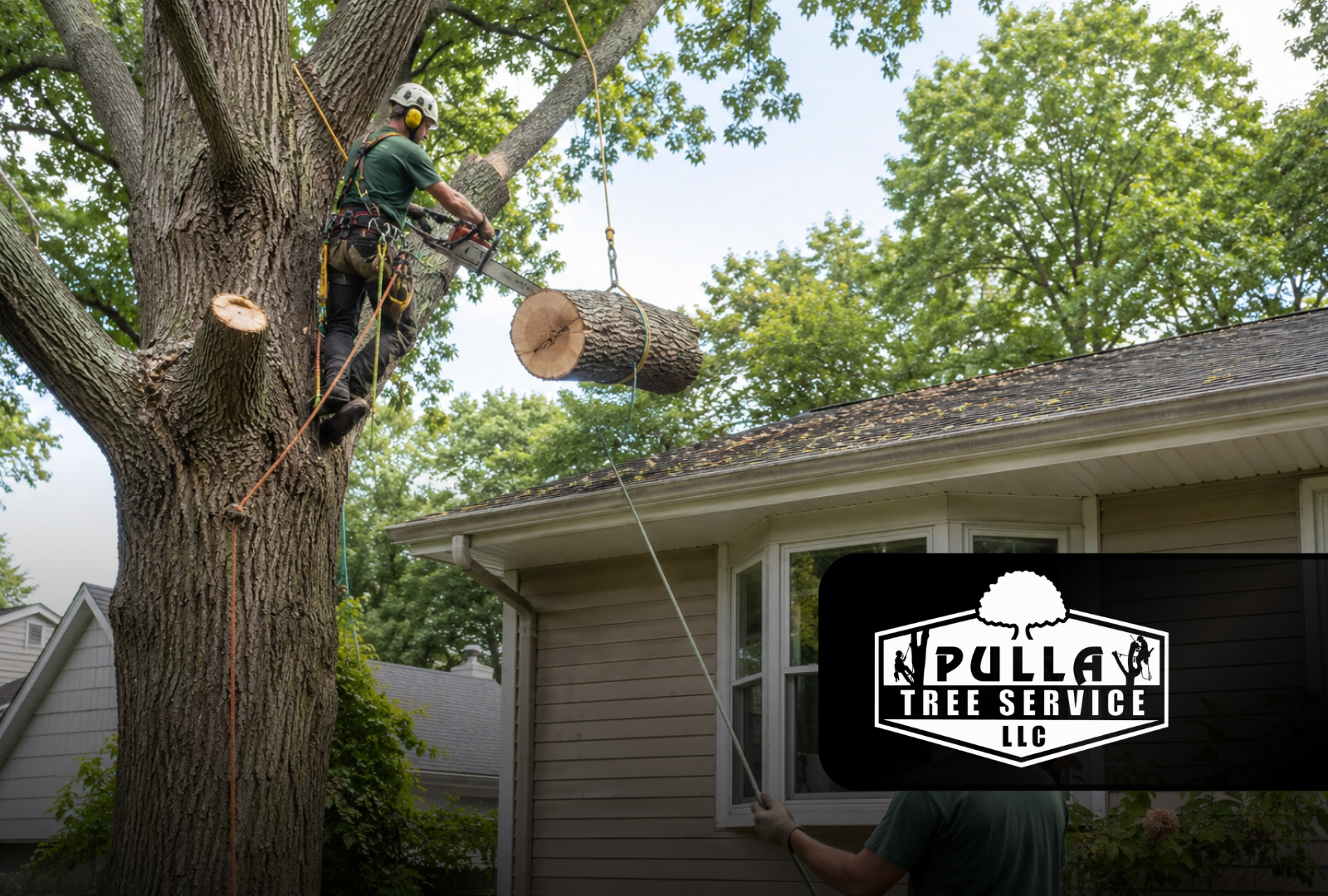
Tree removal for roof protection helps keep your roof safe from branches, leaves, and moisture. Trees bring shade and beauty, but they can also scrape shingles, clog gutters, and create weak spots when they grow too close.
At Pulla Tree Service LLC, we help homeowners spot roof risks early and choose safe steps before damage spreads. As a result, your home stays better protected through storms, heavy winds, and seasonal leaf buildup.
How Nearby Trees Can Slowly Harm Your Roof
Branches near shingles may rub against the roof during windy days. Over time, this can wear away the top layer and allow water to enter. Tree removal near roof areas can reduce this steady damage.
Leaves, twigs, and small branches can also gather in gutters and roof valleys. Then, water may sit too long and cause rot, mold, or stains inside the home.
Warning Signs Your Roof Needs Tree Attention Soon
Some signs are easy to miss until the roof already has damage. However, regular checks can help you act before small issues turn into bigger repairs.
- Branches touch or scrape shingles during windy weather.
- Gutters fill with leaves soon after being cleaned.
- Water stains appear on ceilings or attic walls.
- Shingles look cracked, lifted, or worn under tree shade.
- Moss grows where branches block sun and airflow.
Signs you need roof-protection tree removal? They often include branches that are too close, too heavy, or already weak. When customers contact Pulla Tree Service LLC, we explain the safest next step.
Why Fast Action Prevents Expensive Roof Damage
Tree removal for roof protection is most useful before storm season or heavy winds arrive. Weak limbs can fall without warning, and one branch may tear shingles, break gutters, or open a leak.
Because of this, roof damage prevention tree removal can save you from stress and costly repairs. For more guidance, visit our tree removal reasons guide.
Safe Removal Steps Around Roofs And Gutters
Working near a roof needs care, planning, and the right tools. The work area should be clear, and every cut should guide limbs away from the home.
- Check for power lines, fences, and nearby structures.
- Use safe ropes and controlled cutting when needed.
- Keep people, pets, and vehicles away from the area.
- Remove debris from gutters after the work is complete.
For taller or heavier trees, our team may suggest crane-assisted removal. This can lower risk when branches hang above delicate roof areas.
Professional Help For Trees Growing Near Rooflines
Tree removal near roof structures is not the same as cutting a tree in an open yard. The roof, gutters, siding, and windows all need protection during the process.
With Pulla Tree Service LLC, you get clear planning before any cut begins. For careful service, review our professional tree removal service.
Simple Maintenance Habits That Reduce Roof Risks
Good care between service visits helps your roof last longer. In addition, it helps you notice weak limbs before they become a serious problem.
- Check trees and roof edges every spring and fall.
- Clean gutters after storms and heavy leaf drop.
- Watch for dead branches, cracks, or fungal growth.
- Trim small branches before they touch the roof.
- Call for emergency support after storm damage.
If sudden damage happens, our emergency tree removal team can help reduce further roof harm.
Frequently Asked Questions
When should I remove a tree near my roof?
You should consider removal when branches touch shingles, drop heavy debris, or lean toward the house. Tree removal for roof protection is also wise when the tree is weak, diseased, or damaged.
Can overhanging branches really damage shingles?
Yes. Overhanging tree removal may be needed when branches scrape shingles, block sunlight, or trap moisture. These issues can weaken the roof and lead to leaks over time.
Is trimming always enough to protect my roof?
Not always. Trimming may help with light overgrowth. However, roof damage tree removal may be safer when the tree is unstable, too close, or likely to drop large limbs.
How often should I inspect trees near my home?
Inspect them at least twice a year and after strong storms. This helps you notice broken limbs, leaning trunks, and branches that are moving closer to the roof.
Do you help explain the safest removal option?
Yes. At Pulla Tree Service LLC, our team reviews the tree, roofline, and work area. Then, we explain safe options through our contact page.
Long Term Roof Care Starts With Tree Management
Tree removal for roof protection supports a safer, cleaner, and longer-lasting roof. When branches stay away from shingles and gutters, water can drain better and roof materials can hold up longer.
In the end, smart removal planning protects both your roof and your peace of mind.. With regular checks, safe removal, and better planting choices, your home can stay ready for every season.