
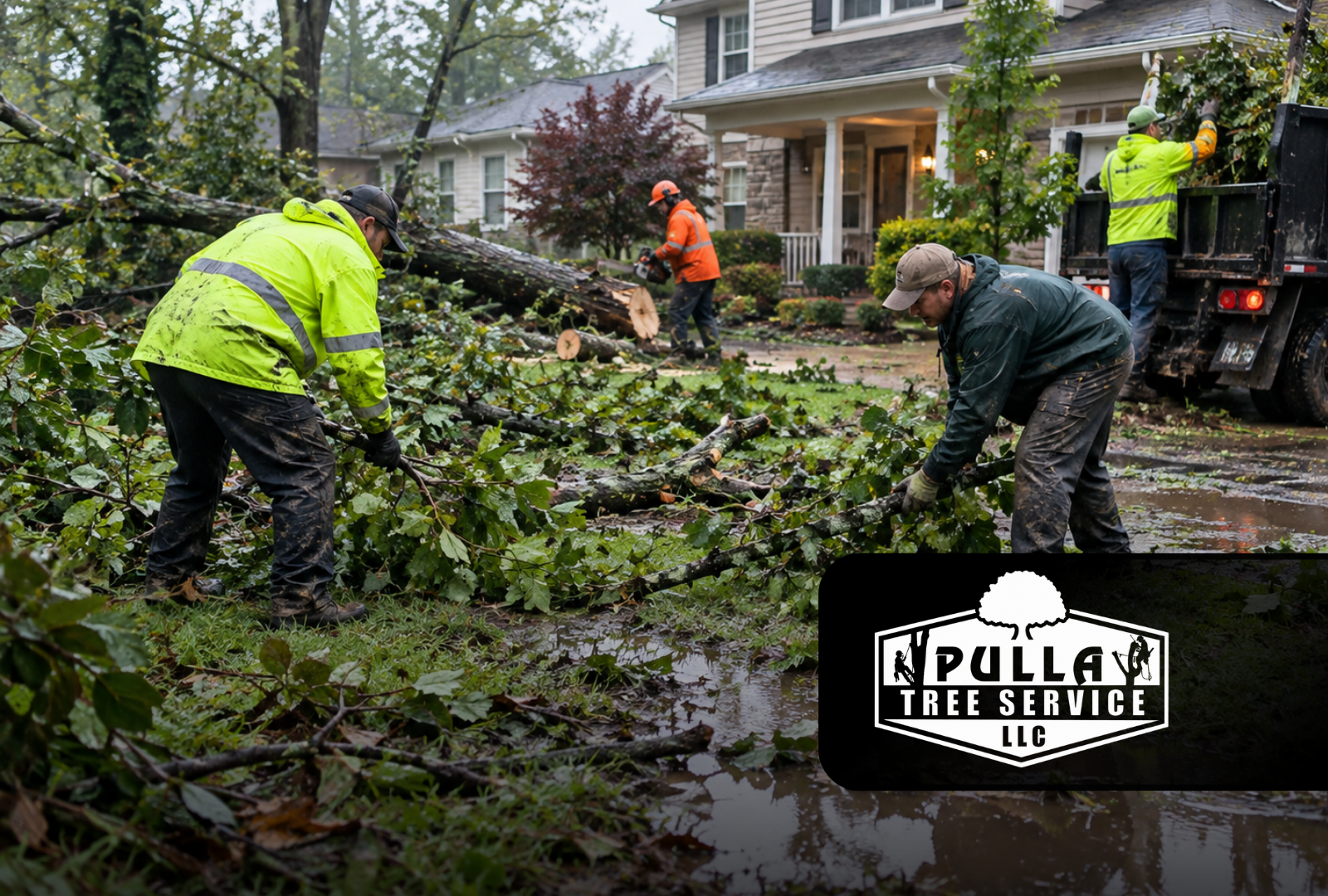
Storm damage cleanup for wet yards can feel difficult when heavy rain leaves branches, leaves, mud, and standing water across your property. At Pulla Tree Service LLC, we focus on making cleanup clear, safe, and easier to manage after severe weather.
Wet ground creates extra challenges because soft soil can hide hazards and make debris harder to move. A careful plan can protect the yard, reduce further damage, and make outdoor areas usable again.
Start With a Careful Assessment of Yard Damage
Before moving anything, walk around the property from a safe distance. Look for broken limbs, leaning trees, damaged fences, washed-out soil, and areas where water has collected. A careful check helps you decide which parts of the wet yard storm cleanup need attention first.
Take photos before cleanup begins, and avoid walking near hanging branches or unstable trees. Clear records can help if you need to report damage or request professional cleanup support.
Protect Yourself Before Moving Wet Storm Debris Safely
Storm debris in wet yard areas may contain sharp branches, broken glass, loose wires, or hidden holes. Wet grass and mud also increase slipping risks. Basic safety steps should come before lifting, moving, or raking.
- Wear waterproof boots with a strong grip.
- Use work gloves and eye protection.
- Keep children and pets away from debris.
- Avoid touching fallen or damaged utility lines.
At Pulla Tree Service LLC, we recommend leaving large, unstable, or overhead storm debris to trained crews with the right equipment.
Clear Storm Debris Without Damaging Soft Yard Ground
Storm damage cleanup for wet yards requires a lighter approach than cleanup on dry soil. Heavy machines, repeated foot traffic, and loaded wheelbarrows can leave deep marks when the ground is saturated. Begin with smaller branches and loose material before addressing heavier debris.
Work from the outside toward the center and separate natural debris from trash. Our guide to practical storm debris cleanup methods offers more ways to stay organized and reduce yard disturbance.
Manage Standing Water Before Completing Your Yard Cleanup
Storm cleanup after rain becomes harder when water remains in low areas. Standing water softens soil and hides obstacles. Avoid digging deep channels near large roots because this can disturb damaged ground.
- Clear leaves from visible surface drains.
- Move loose debris away from water flow paths.
- Allow saturated areas time to drain naturally.
- Mark deep puddles so people can avoid them.
Once the water level drops, cleanup can continue with less risk of creating ruts or compacting soft soil.
Check Storm-Damaged Trees for Hidden Property Safety Hazards
Broken branches are not always easy to notice. Cracks, hanging limbs, exposed roots, and leaning trunks can signal problems. Never stand beneath damaged branches while checking the property after a storm.
Homeowners can review our Fairfield storm cleanup information or Norwalk storm cleanup information. With Pulla Tree Service LLC, you can get guidance when yard storm damage cleanup is unsafe to handle alone.
Restore Soil and Plants After Heavy Storm Rainfall
After storm damage cleanup for wet yards removes the main debris, inspect grass, garden beds, shrubs, and exposed roots. Mud can cover plants and block air, while moving water may wash mulch away. Handle these areas gently while the soil remains soft.
Brush mud from leaves, replace mulch after the ground starts drying, and avoid adding heavy soil over exposed roots. Bent plants may recover naturally. Check severely damaged areas before removing loose material.
Frequently Asked Questions
Can I clean a wet yard immediately after rain?
Small, safe debris can often be collected, but saturated areas should receive limited foot traffic. Waiting for some drainage can reduce soil damage and make cleanup easier.
What should I do with large fallen branches?
Avoid moving large limbs without proper tools and support. Heavy branches may shift suddenly, especially on wet or sloped ground.
How can I prevent more damage while cleaning?
Use light tools, stay on firm areas, and avoid driving equipment across soft soil. A planned route can also reduce repeated traffic.
When should I seek emergency storm cleanup near me?
Professional help is important when damaged trees threaten buildings, branches hang overhead, access is blocked, or debris is too large to move safely.
Does wet weather change the cleanup process?
Yes. Storm damage cleanup for wet yards requires extra care because saturated soil, hidden debris, and unstable trees can create additional risks.
Get Reliable Help After Serious Storm Damage Cleanup
Some cleanup jobs need trained crews and specialized equipment. Large limbs, damaged trees, blocked driveways, and unstable debris can make storm recovery dangerous. Professional support can help protect people and property.
- Keep a safe distance from unstable trees.
- Document visible damage before major work begins.
- Choose professional help for heavy storm debris.
- Review the yard again after the soil dries.
At Pulla Tree Service LLC, we can help you plan storm damage cleanup for wet yards with safety and property protection in mind. When your yard needs professional attention, contact us about storm cleanup assistance and discuss the next safe step.