
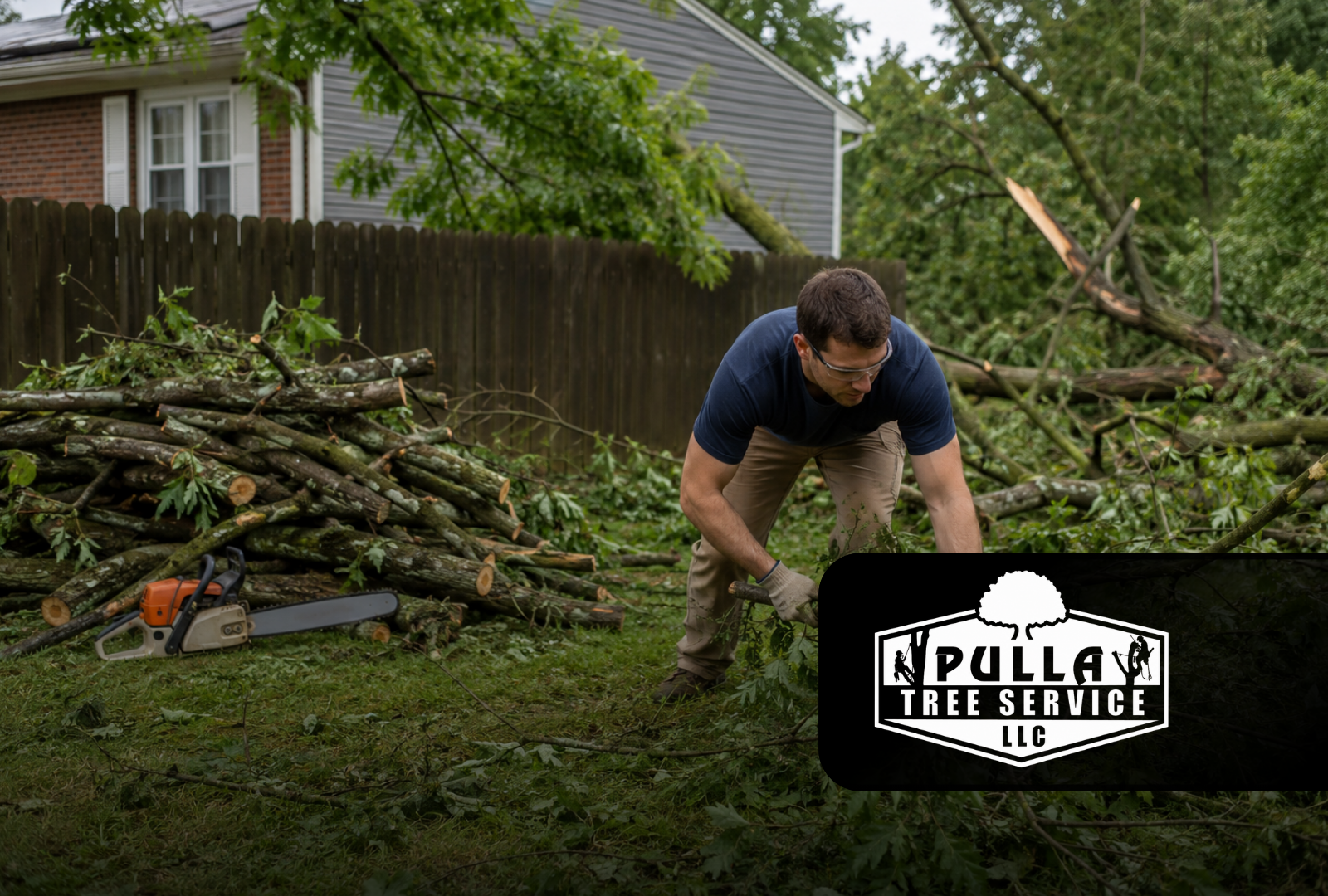
Powerful winds can leave heavy debris across driveways, damage roofs, and scatter loose materials throughout the yard. Storm damage cleanup after wind damage is the first step toward making your property safe, usable, and calm again after severe weather passes.
At Pulla Tree Service LLC, we guide property owners through each stage with practical care. From the first safety review to the final haul-away, a clear plan helps reduce risk, protect important areas, and restore normal access faster.
Begin With a Careful Review of Property Damage
Start by walking around the property from a safe distance. Look for blocked paths, roof damage, loose siding, damaged fences, broken outdoor items, and water near the foundation. Take clear photos before moving anything, especially when an insurance claim may be needed.
A detailed review supports better wind damage cleanup decisions. Avoid unstable areas, hanging materials, and downed power lines. For more preparation guidance, review our storm clean-up checklist for homeowners before beginning any work.
Protect Everyone Before Moving Loose Storm Debris Outdoors
Safety should come before speed during storm damage cleanup after wind damage. Wear sturdy gloves, protective glasses, strong boots, and a hard hat when objects may fall. Keep children, pets, and visitors away from work areas until every danger has been addressed.
- Keep a charged phone and first-aid kit nearby.
- Work with another adult whenever possible.
- Stay far from power lines and unstable structures.
- Stop work during rain, lightning, or strong gusts.
Use Simple Equipment for Faster and Safer Cleanup
Basic equipment can make storm debris removal safer and more organized. Use a rake, shovel, tarps, sturdy containers, and a wheelbarrow for light materials. Heavy or awkward objects may require trained support and lifting equipment designed for urgent cleanup work.
Before using any item, check that it is clean, secure, and working correctly. Never handle equipment you do not understand. Our team at Pulla Tree Service LLC can manage large debris when the job is beyond normal household cleanup.
Open Blocked Driveways Without Creating Additional Safety Risks
Blocked access requires patience because heavy debris can shift without warning. Do not move objects resting against a building, vehicle, fence, or utility line. Sudden movement can cause injury or add more damage to the property.
- Mark a safe work area around the blockage.
- Move small loose items before larger materials.
- Keep vehicles and people outside the danger zone.
- Place cleared debris on tarps for easier hauling.
For safer next steps, review our guide to restoring access after a storm.
Sort Storm Debris for Cleaner and Easier Disposal
During storm damage cleanup after wind damage, separate natural yard waste from glass, metal, plastic, and damaged building materials. This step keeps sharp items away from softer debris and makes local collection or recycling easier.
- Place leaves and small loose pieces in yard waste piles.
- Group clean natural debris for local collection.
- Bag glass and sharp materials separately.
- Keep damaged building materials away from compost.
Our storm debris cleanup tips explain how simple sorting can save time, reduce waste, and keep the property more organized.
Know When Professional Storm Support Becomes Truly Necessary
Some damage should never become a do-it-yourself project. Call trained help when heavy debris touches power lines, rests on a roof, blocks an entrance, or creates pressure against a home, garage, vehicle, or nearby structure.
With Pulla Tree Service LLC, you get clear guidance before work begins. We can support same-day storm cleanup when urgent access or safety is involved. Our local Norwalk storm cleanup information explains what property owners can expect.
Frequently Asked Questions
What should I check immediately after strong winds?
Check for downed wires, hanging materials, blocked exits, roof damage, and unstable outdoor objects. Stay back from unsafe areas and document visible damage before cleanup starts.
Can I move heavy storm debris myself?
Small loose items may be manageable. However, heavy, trapped, or unstable debris needs professional support because it may shift suddenly and cause injury.
How quickly should storm debris be removed?
Remove dangerous debris as soon as conditions are safe. Same-day storm cleanup may be needed when driveways, doors, walkways, or emergency access points are blocked.
Should I contact my insurance company first?
Take photos and contact your insurer early. Keep receipts for equipment, hauling, repairs, and storm damage cleanup after wind damage.
How can future storm damage be reduced?
Secure outdoor furniture, clear gutters, improve drainage, inspect fences, and store loose items before severe weather. These steps can reduce hazards around the property.
Restore Your Property With a Clear Recovery Plan
After debris is gone, repair damaged soil, fences, grass, and outdoor areas. A final walk-through helps confirm that storm damage cleanup after wind damage has addressed every visible hazard. Add topsoil where the ground was disturbed, improve drainage, and replace damaged items as needed.
When customers contact our team , we explain the safest next step for storm damage cleanup after wind damage. A calm plan, suitable equipment, and timely support can turn a difficult situation into an organized recovery.