
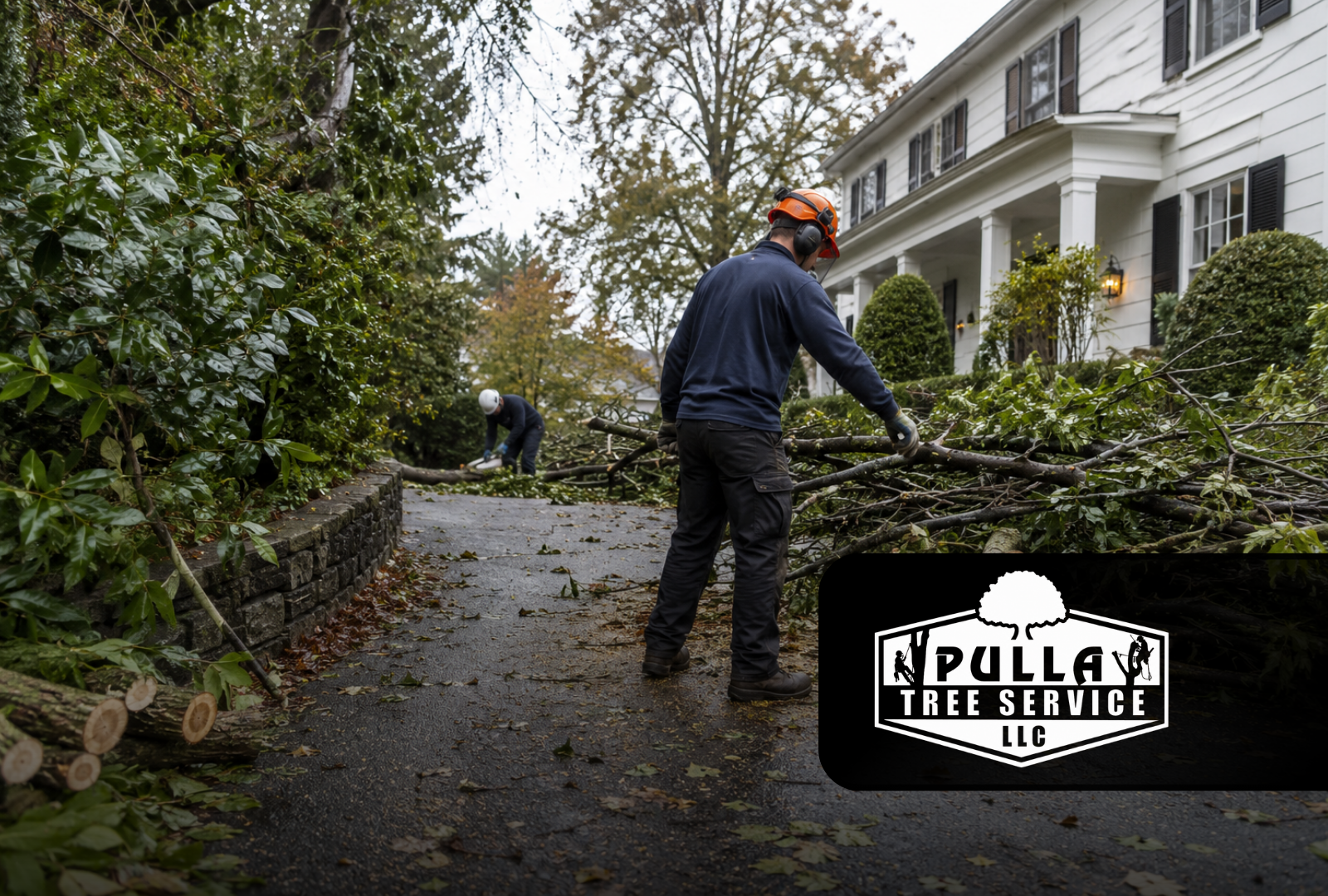
Storm debris removal can feel stressful after strong wind, heavy rain, and falling branches leave your yard unsafe. However, a calm plan helps you protect your home, avoid injuries, and know when the job needs trained help.
At Pulla Tree Service LLC, we guide homeowners through safer storm cleanup with clear steps, careful work, and respect for each property. With the right approach, you can turn storm damage into an organized recovery process.
Start With A Careful Property Damage Review
Begin by walking around your property slowly and looking for broken branches, fallen trees, damaged fences, loose wires, and blocked paths. In addition, check sheds, decks, patios, and outdoor furniture for damage before moving anything.
Take photos of every damaged area before cleanup starts. These photos may help with insurance records, repair planning, and storm debris removal cost questions if you later need professional support.
Keep Everyone Safe Before Cleanup Work Begins
Safety should come before speed during storm cleanup. Wear thick gloves, strong boots, eye protection, and long sleeves before touching branches, sharp pieces, or wet materials.
- Stay away from downed power lines and wet electrical areas.
- Call utility providers if you smell gas or see wires.
- Keep children and pets away from damaged trees.
- Use a first-aid kit for small cuts or scrapes.
Our team at Pulla Tree Service LLC always checks for hidden risks before moving storm debris. This careful first step helps reduce injuries and keeps the cleanup process more controlled.
Gather The Right Tools For Easier Cleanup
Storm debris removal in Greenwich is easier when the right tools are ready before the work begins. Use rakes, shovels, tarps, wheelbarrows, and heavy-duty bags for smaller branches, leaves, and loose yard waste.
For larger wood, damaged limbs, or unsafe tree sections, avoid using tools beyond your skill level. You can review our safe debris cleanup tips for more practical guidance.
Sort Debris Into Clear And Safe Piles
Sorting materials helps cleanup move faster and keeps dangerous items away from regular yard waste. Place branches, leaves, metal pieces, roofing parts, and trash in separate areas before loading or disposal.
- Put branches and logs in one clear pile.
- Keep nails, metal, and broken fencing separate.
- Bag leaves, twigs, and small loose debris.
- Set aside paint, fuel, or chemicals for special disposal.
This step can also help if you compare storm debris removal cost with a local crew. Organized piles make the job easier to review and may reduce confusion during pickup.
Handle Fallen Trees With Extra Care
Large fallen trees and heavy branches can shift without warning. Therefore, never stand under broken limbs or cut wood that is pressing against fences, roofs, cars, or other trees.
When a tree is close to your house, driveway, or power lines, professional help is the safer choice. Read our guide on removal after storm damage to better understand when expert support is needed.
Clear Roofs And Gutters To Stop Water
After the yard is safe, check gutters and roof edges for leaves, twigs, and loose branches. Blocked gutters can send water toward siding, windows, and foundations, which may cause more damage.
Use a steady ladder on flat ground and ask another adult to hold it. However, avoid climbing if the roof is wet, damaged, or steep because one slip can lead to serious injury.
Dispose Of Storm Waste The Responsible Way
Responsible disposal keeps your property cleaner and supports local rules. Branches and green waste may go to compost or yard waste programs, while metal, broken building materials, and hazardous items often need separate handling.
- Check local pickup days before placing debris outside.
- Do not mix chemicals with regular yard waste.
- Cut branches to the size allowed by local rules.
- Search debris removal near me in Greenwich for approved options.
At Pulla Tree Service LLC, we help customers plan cleanup in a safe and organized way. For a deeper home plan, use our storm recovery checklist before final disposal.
Frequently Asked Questions
What should I check first after a storm?
Start with safety hazards, such as downed wires, unstable trees, broken glass, and blocked exits. Then take photos and make notes before moving debris.
When do I need emergency storm cleanup?
You need emergency storm cleanup when trees block access, branches touch power lines, or debris creates a direct risk to your home or family.
Can I remove large branches by myself?
Small branches may be safe to move with care. However, large limbs can roll, snap, or shift, so experienced storm cleanup crews should handle risky sections.
How can I reduce cleanup problems next time?
Regular property checks, gutter cleaning, and yard checks can reduce damage before bad weather arrives. A simple plan also helps your family act faster.
Where can I get local storm help?
With Pulla Tree Service LLC, you can request safe support through our Greenwich emergency service page when storm damage needs quick attention.
Bring Your Yard Back To Safe Order
Storm debris removal works best when you slow down, check the risks, sort materials, and use the right help for heavy or unsafe debris. This approach protects your property and makes recovery feel less overwhelming.
When customers contact Pulla Tree Service LLC, we explain the safest next step and help them plan the work clearly. To request help, visit our contact page for cleanup support.