
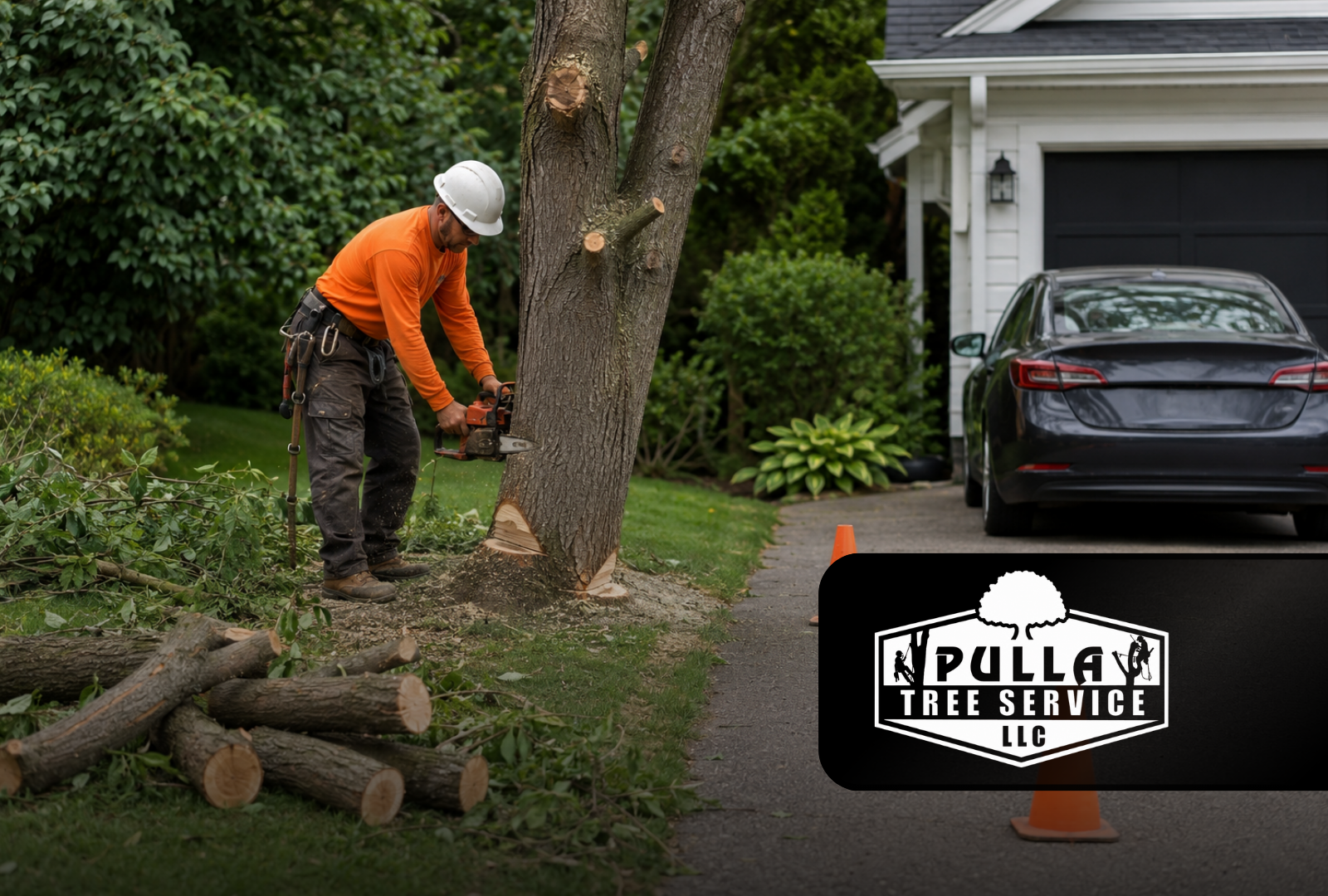
Tree removal near driveways is essential when roots, weak limbs, or leaning trunks threaten access and safety. Trees add shade and beauty, yet poor placement may crack pavement, block driver views, or damage vehicles during severe weather.
At Pulla Tree Service LLC, we help homeowners address these risks before small warning signs become larger problems. Careful planning protects the driveway, keeps daily access open, and supports a cleaner, safer property.
Hidden Tree Hazards Can Damage Driveways Over Time
Trees growing beside paved areas may cause damage slowly. Roots can lift asphalt or concrete, while heavy branches may fall during wind or rain. In addition, fallen trees on driveways can block vehicles and delay emergency access.
- Raised pavement can cause trips and tire damage.
- Low branches may reduce driver visibility.
- Loose limbs can strike cars or nearby structures.
These problems often become worse when they remain unnoticed. Early action can protect the surface and reduce the chance of sudden access problems. It can also help homeowners avoid larger repairs after storms or ground movement.
Regular Inspections Reveal Problems Before They Become Dangerous
Seasonal checks can reveal decay, hollow trunks, loose bark, and leaning growth. These signs may show that tree removal close to driveways is safer than waiting for failure. Because conditions change with age and weather, tree removal near driveways should be considered when a tree begins losing strength or balance.
Our team also checks how roots affect paved surfaces. Early signs, such as widening cracks or lifted edges, make it easier to plan the next step. Review our common reasons for tree removal to understand when action may be needed.
Clear Warning Signs Show When Removal Becomes Necessary
Dead limbs, split trunks, large cavities, and a strong lean toward the driveway should never be ignored. Soil movement near the base can also mean the root system is unstable and may no longer support the tree safely.
- Branches fall without strong wind.
- Roots push through driveway edges.
- The trunk leans toward parked vehicles.
- Cracks spread from the tree toward pavement.
When these signs appear, driveway tree removal may protect both people and property. Acting early also makes tree removal near driveways easier to plan because the area can be cleared before urgent damage or blocked access occurs.
Professional Planning Keeps Nearby Pavement Safer During Removal
Work beside a driveway requires control, proper equipment, and a clear plan. Each tree section must be lowered carefully so it does not strike pavement, vehicles, fences, roofs, or nearby buildings.
With Pulla Tree Service LLC, you receive clear guidance before work begins. Our crew plans safe drop zones, equipment access, and debris removal. Learn more about our professional removal process for projects near homes and paved spaces.
Simple Driveway Preparation Helps Crews Work More Safely
Before the crew arrives, move vehicles, toys, tools, and outdoor furniture away from the work area. Clear access gives workers enough space to position equipment and complete tree removal for driveway access with fewer delays.
- Mark driveway edges and soft ground.
- Share known underground utility locations.
- Tell neighbors about temporary access changes.
- Keep children and pets inside the home.
Protective mats may also reduce marks from heavy equipment. Good preparation supports tree removal near driveways by giving workers enough room to control each section and protect nearby surfaces. Our tree removal equipment guide explains how the right tools support safer work.
Strong Safety Steps Reduce Risks Around Your Property
A clear work zone should keep people away from falling debris and moving equipment. Crew members need helmets, eye protection, gloves, and steady communication throughout the project. These steps help everyone understand where equipment will move and where tree sections will land.
Work near paved areas also requires planned exit paths and controlled lowering methods. For narrow spaces, tree removal near driveways may involve ropes, lifts, or smaller sections. At Pulla Tree Service LLC, we review each work area before removal begins, especially when buildings, power lines, or limited access points are nearby.
Frequently Asked Questions
Can tree roots crack a driveway surface?
Yes. Large roots can lift pavement, widen cracks, and create uneven areas over time. Damage may begin near the edge before spreading toward the center.
When is driveway tree removal the safest choice?
Removal may be safest when a tree is dead, unstable, badly leaning, or already damaging the driveway. A professional review can confirm the level of risk.
Can crews protect pavement during the removal process?
Yes. Protective mats, controlled lowering, and careful equipment placement can greatly reduce the chance of marks, cracks, or impact damage.
What happens when fallen trees block driveway access?
The area should remain clear until trained professionals remove the tree and check for loose limbs, damaged pavement, or other hidden hazards.
How can future root damage be reduced?
Safe planting distances, root barriers, and yearly checks can help protect paved areas from future pressure and surface movement.
Long Term Planning Keeps Driveways Clear And Attractive
After tree removal near driveways, check the pavement for cracks, low spots, or exposed roots. This review can reveal damage that was hidden by soil, leaves, or debris. Small repairs may stop water from entering gaps and making the surface worse.
Choose low-growing plants with shallow roots for spaces beside the driveway. Also, check remaining trees after severe weather and watch for new pavement changes. For full details, visit our residential removal options or reach out our team about driveway safety.
At Pulla Tree Service LLC, we explain the safest next step and help homeowners plan with confidence. A clear driveway protects daily access, supports safer vehicle movement, and keeps the property looking organized and welcoming.