
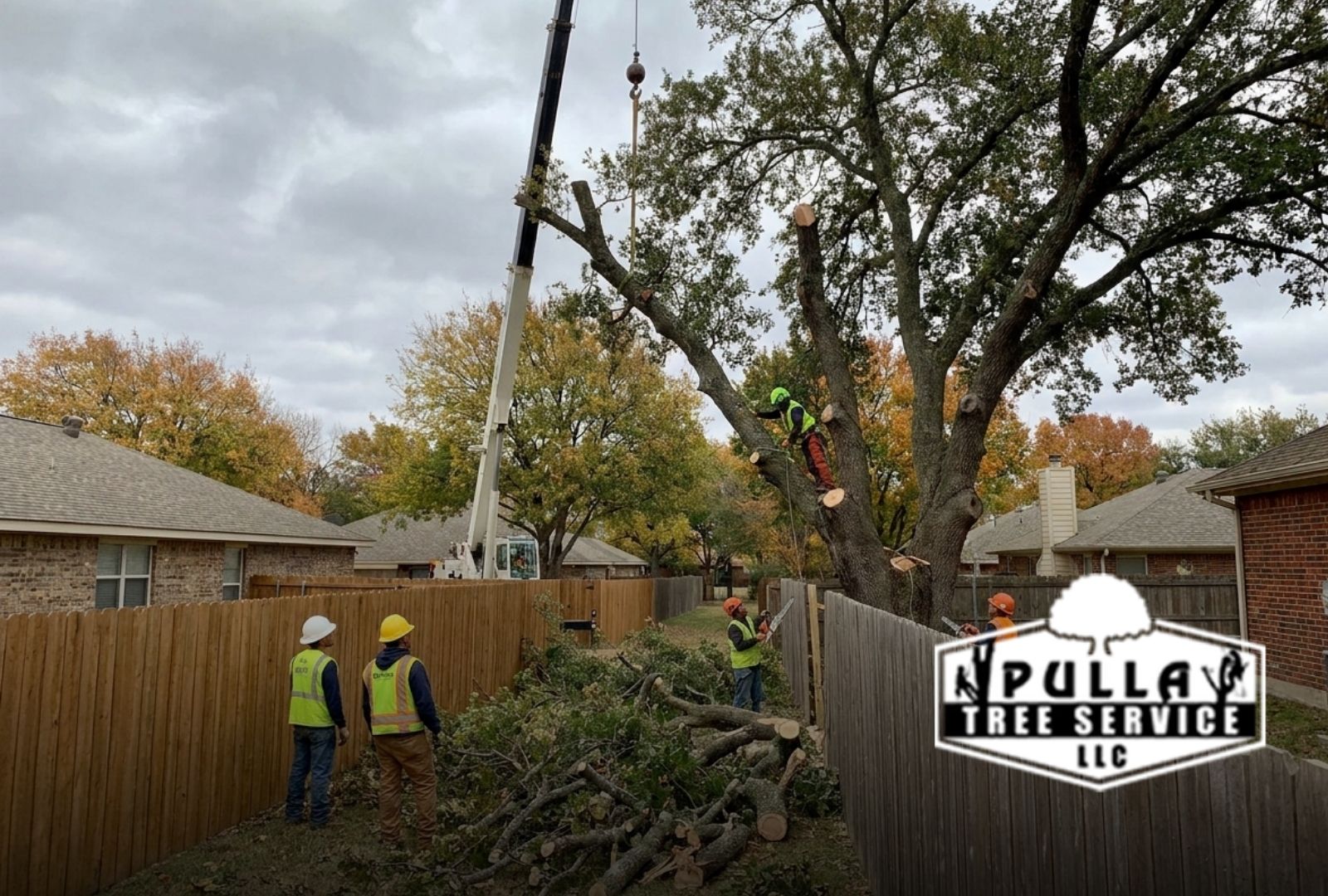
Tree removal near property line can feel stressful when a tree stands close to a fence, home, or shared boundary. At Pulla Tree Service LLC, we know this is more than removing a tree. It is about safety, clear limits, and respectful talks with neighbors.
Before starting tree removal near property line, it helps to know who owns the tree, what local rules apply, and how to avoid conflict. With the right steps, homeowners can protect their property and keep the process calm.
Clear Boundaries Come First Before Any Removal Work
Property limits are not always easy to see. A fence, old marker, or natural line may not show the true boundary. Therefore, a recent survey can help you understand where your land ends and where your neighbor’s land begins.
When a trunk sits on both sides, boundary tree removal may require shared approval. This is different from fence line tree removal, where the tree may stand beside a fence but remain on one property.
- Check a recent property survey before any work begins.
- Confirm whether the trunk stands on one side or both sides.
- Keep notes, photos, and written records for clarity.
Local Rules Can Shape Your Removal Decision Today
Many cities have rules for trees based on size, type, or location. As a result, property line tree removal may need a permit before any work starts. Ignoring this step can lead to delays, fines, or problems with neighbors.
For tree removal near property line, homeowners should contact the local permit office or review city rules online. Some areas also ask for written neighbor approval when the tree affects shared land.
Shared ownership can make decisions more sensitive. If the tree stands on the boundary, both sides may need to agree before removal. A calm talk can help each person share concerns about safety, shade, fences, or possible damage.
Many homeowners ask: who is responsible for tree removal when a neighbor’s tree is involved? It often depends on the tree’s location and local rules. However, written communication can reduce confusion and help both sides agree on the next steps.
- Share survey details or photos with your neighbor.
- Talk about risks before discussing payment responsibility.
- Use email or written notes to confirm decisions.
Risks Grow When Boundary Work Lacks Proper Planning
Removing a tree near shared land can create safety and legal risks. Large limbs, weak trunks, or nearby fences can make the work difficult. Also, damage to your neighbor’s property may create personal responsibility if planning is poor.
Property line tree removal cost can also increase when permits, access issues, or cleanup needs are not reviewed early. Therefore, careful planning helps avoid surprise problems and supports a safer process for everyone involved.
Professional Help Makes Fence Line Projects Much Safer
Professional tree removal near property line gives homeowners better control over risk. Our team reviews the site, nearby structures, access points, and possible hazards before work begins. This helps protect both properties during the project.
We also helps homeowners understand safe removal steps and project needs. For more guidance, review our professional removal guidance before making a final decision.
Written Agreements Keep Property Line Plans Organized Well
A written agreement can prevent future conflict. It should explain who approves the work, how responsibilities are shared, and when the project will happen. This is especially useful when boundary tree removal affects both homes.
For helpful background, you can also read our helpful removal tips and common reasons for removal.
- Write down the agreed project scope.
- Include permit needs and access details.
- Keep copies signed by both property owners.
Frequently Asked Questions
Who owns a tree on the property line?
Ownership often depends on where the trunk grows. If it stands on both sides, both neighbors may share rights and responsibilities. Local rules can also affect the final answer.
Can I remove branches that reach my yard?
You may have the right to manage overhanging branches up to the boundary. However, you should avoid harming the tree or entering your neighbor’s land without permission.
Approval is often needed when the trunk stands on the boundary. Written consent helps prevent disputes and gives everyone a clear record before tree removal near property line begins.
What affects property line tree removal cost?
Access, tree size, nearby structures, permits, and cleanup needs can affect the final project scope. A site review gives a clearer idea of what the work may require.
When should I call a professional team?
Call a professional team when a tree is close to fences, homes, power lines, or shared land. This helps reduce safety risks and protects both properties.
Start Your Property Line Removal Conversation Today Safely
Tree removal near property line works best when homeowners stay informed, respectful, and organized. Clear boundaries, local permits, neighbor talks, and written agreements can make a difficult situation much easier to handle.
At Pulla Tree Service LLC, we help homeowners plan safe property line projects with care and clear communication. To discuss your needs, check our tree removal service options or contact Pulla Tree Service LLC.